
Read a Gratiot County Current Owner Card
Equalization points to BS&A for parcel data, and FetchGIS opens a property-details report. Some BS&A labels vary, so treat the county and GIS fields as an inventory. Jot down the exact wording the screen displays.
| Owner or owner address | The roll's present tax-contact lead; verify the exact live label |
|---|---|
| Property address | The situs that identifies the land, not necessarily the owner's mailing place |
| Parcel/PIN and unit | The cross-office key and assessing jurisdiction |
| Tax description | The short description used to match the deed or plat |
| Sales information | A transaction lead, not automatically the newest vesting instrument |
| Current and prior tax year | MBOR Assessed, Final SEV, and Final Taxable context |
An owner of record is a record status. It proves nothing about who lives there. A different owner address may only mean tax notices go elsewhere. Copy the name, address, PIN, unit, and description before you compare the deed.
Confirm the Gratiot County Owner of Record
For recorded conveyances, the Register of Deeds controls. Its index pulls buyer and seller names plus legal descriptions, then ties the document trail together. Find the parcel in the roll, then let the newest deed settle the present title.
- Search BS&A or FetchGIS by address and save the complete PIN and roll name.
- Search that party as grantee in Tapestry, Laredo, or the courthouse index.
- Open the newest relevant deed and compare its legal description with the parcel.
- Check later quitclaims, fiduciary deeds, land contracts, or other instruments before deciding which record is current.
- Owner of record
- The party shown as owner on a dated public roll or instrument.
- Vesting
- The wording that states how a person, trust, or entity holds the conveyed interest.
- Tenancy
- The legal relationship among multiple title holders, which must be read from the instrument.
- Registered agent
- A public business contact, not necessarily an owner of the land or business.
Allow for Gratiot County Transfer Processing
Michigan wants a Property Transfer Affidavit filed within 45 days. Gratiot publishes no exact roll-refresh schedule. A deed recorded yesterday can therefore be newer than the owner shown for assessment purposes. Write down the deed date and the recording date. Note the date you viewed the parcel card. Record any affidavit status the local assessor confirms.
A slow roll update does not make the old card useless. While the transfer works through local processing, the card still helps you match the PIN, mailing address, legal description, and assessment unit.
Separate Gratiot Owner, Mailing, and Situs Addresses
FetchGIS separates Property Address from Owner Address. The first locates the real estate. The second carries tax correspondence. Rural routes, renamed streets, vacant land, and city-edge parcels make that split matter. Keep a result even when the owner address sits somewhere else entirely.
For lawful contact about a boundary, a purchase inquiry, or a deed correction, use the published mailing field and name the parcel clearly. Never treat it as proof of where someone lives.
Check Entity and Estate Names on the Current Record
Does the owner field name an LLC? Preserve the full legal name. Then search Michigan's MiBusiness Registry for entity status and registered-office leads. The registry changed in June 2025. Business filings clarify the entity, but only the deed shows the real-property interest actually conveyed.
Trusts and estates deserve the same care. A trustee, personal representative, or fiduciary may sign in a role. They may not appear as a beneficial owner. Probate files can explain the authority when the recorded chain leaves it unclear.
Use Gratiot Fraud Alerts as a Current-Record Watch
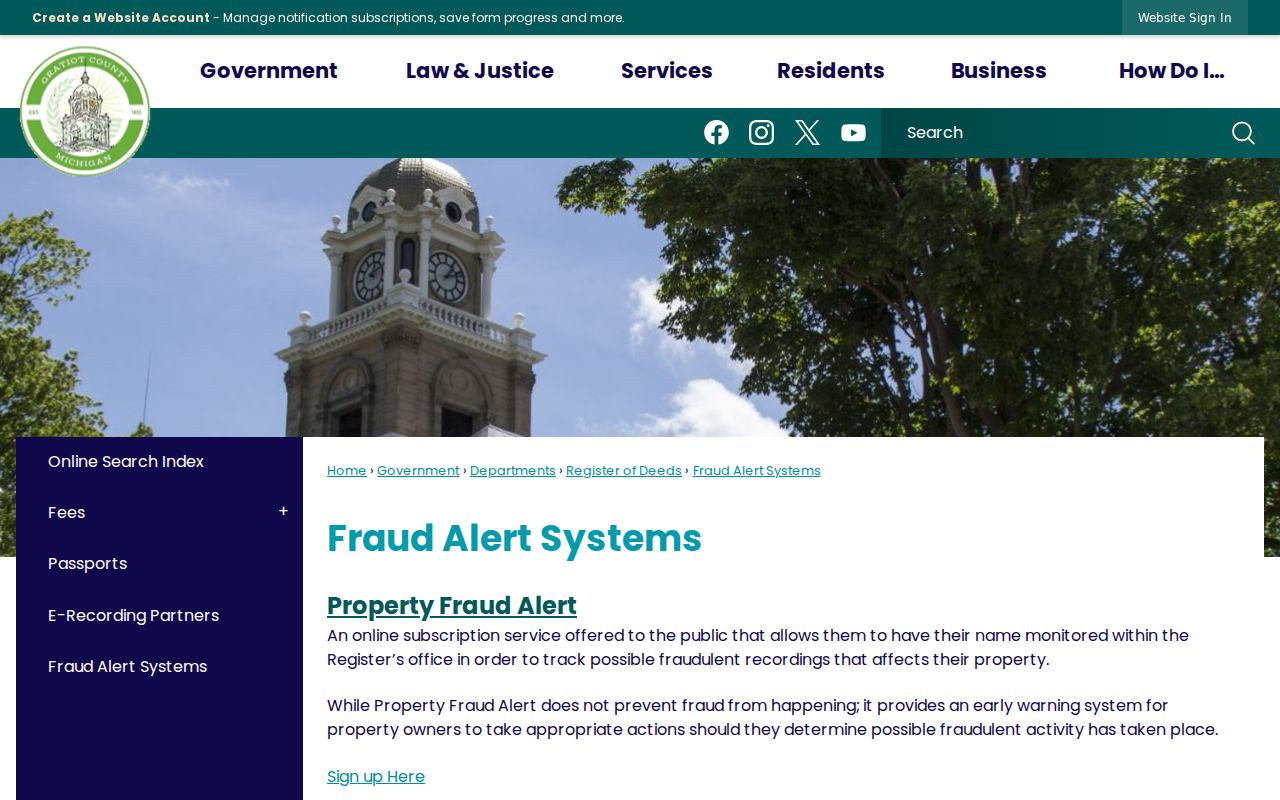
The county Fraud Alert Systems page offers property-fraud and notary-fraud alert routes. Monitoring can flag a newly indexed name. It cannot judge whether a deed is valid, and it never replaces periodic review.
Verify a Current Owner at the Ithaca Courthouse
When a portal blocks you, or it leaves things ambiguous, try the free parcel terminals in the courthouse lower level or the Treasurer's Office. Equalization answers at 989-875-5203. The Register of Deeds at 214 E. Center Street lists 989-875-5217 and weekday hours from 8:00 a.m. to 4:30 p.m.
For remote deed work, Tapestry handles occasional paid searching and Laredo serves regular users. Counter review still matters. The county does not state the earliest online date, even though office land records reach the mid-1800s.
Compare Gratiot's Last Sale with the Latest Deed
FetchGIS shows Sales Information, while the recorder index tracks instruments. A sale row is only a summary. The deed itself can show parties, legal description, vesting, reserved rights, and recording details. A later quitclaim or fiduciary deed may look nothing like a market sale. Search past the displayed sale date and confirm no later conveyance touches the parcel.
Each office holds one piece. Equalization explains card fields. The local assessor handles transfer processing. The Treasurer keeps tax status. The Register of Deeds supplies the recorded instrument. Michigan FOIA can reach a specifically described non-indexed record. But it cannot force an office to create an ownership opinion.
Match the Current Gratiot Owner to One Parcel
An owner-name search can return several properties, especially for entities, families, and common surnames. Start from the site address. Copy the PIN. Check the assessment unit. FetchGIS supports address, owner, PIN, intersection, and coordinate routes, but the selected parcel's own identifier and description should control the match.
The official Ithaca plan shows PIN examples with different middle segments, so keep every digit and any leading zero. A PIN links current records fast. It still cannot replace the deed's legal description. Compare both before you conclude the owner-of-record card and the recorded conveyance concern the same tract.
Check Later Instruments Affecting a Gratiot Current Owner
Gratiot County accepts more than 200 document types for recording. The office's own page lists warranty deeds, quitclaim deeds, land contracts, liens, mortgages, oil-and-gas leases, powers of attorney, and releases among them. Not every result under a party name is a deed. Some documents carry no fee interest at all. Before assuming ownership, read the document type, the parties, the granting language, and the legal description in the deed records.
Treat the Gratiot Owner Card as a Dated Snapshot
Note the date on the parcel card and the tax year it displays. FetchGIS separates current from prior-year assessment data in its report template. A deed can also reach the Register of Deeds before other local records catch up. Gratiot publishes no guaranteed refresh interval.
Save the parcel report, the deed reference, and the dates each system shows whenever accuracy counts. A later recheck may reveal a new owner name. Older assessment or sale fields stay the same. That is routine recordkeeping, not evidence that one source is wrong. Direct questions to the right custodian. The assessor handles the roll. The Register of Deeds handles recording. The Treasurer handles tax-file contacts.
Contact a Gratiot County Current Owner Lawfully
The tax mailing address on Gratiot County's tax roll is the right starting lead for a property matter. It may point to a post office box, a business office, a trustee, or another contact point. Michigan's Address Confidentiality Program lets eligible people facing specified threats substitute a designated address, so never attempt to work around a protected one.
Lawful use. Contact a Gratiot County owner only for legitimate property matters; never use public details to stalk, harass, intimidate, or cause harm.